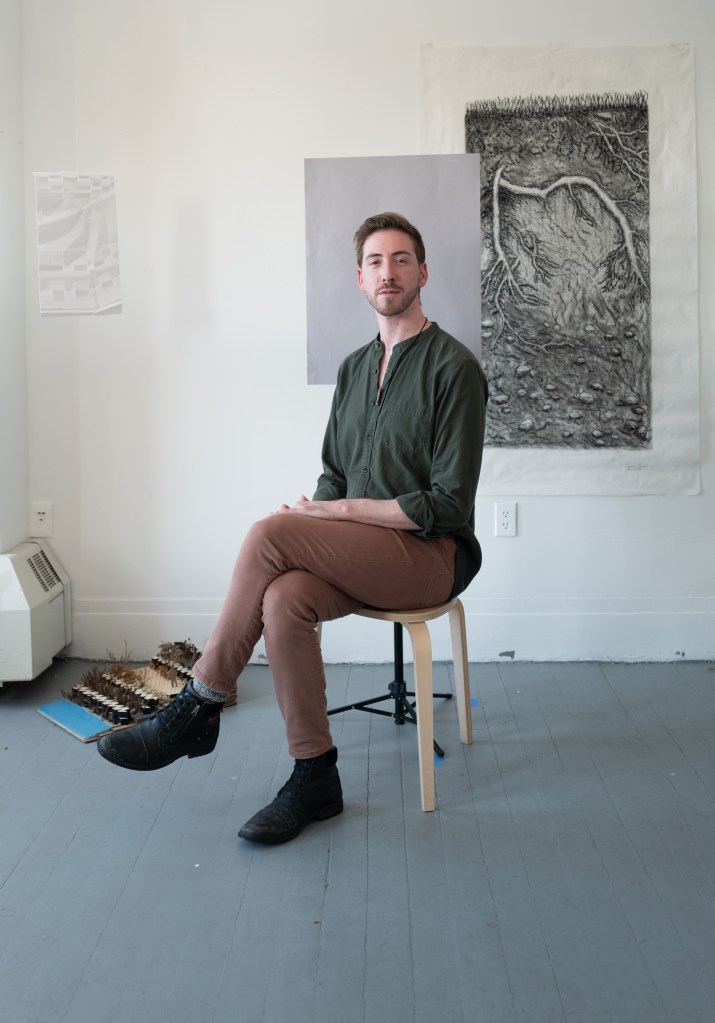
Travis Kelley
I am a landscape designer, botanical artist, writer, and photographer.
With a career spanning floral, container, interior plantscape, and garden design, I have been fortunate to work in some of the most special places the Boston area has to offer. I bring these experiences to my work as a landscape designer at KMDG, an urban design practice focused on the public realm. I believe in the power of landscape to positively contribute to people’s everyday lives, shaping the experience of place and our collective perception of the world.
To me, landscape architecture brings together my expertise in planting and garden design with a passion for narrative, storytelling, theater, and filmmaking. Drawings allow us to imagine stories unfolding through time and space, while built projects allow these stories to take on a life of their own. Our landscapes belong not to the design team, but to the people who utilize them, sometimes for a few moments, sometimes consistently over decades. The landscape becomes the setting for multitudes of stories, unfolding in perpetuity as the landscape changes alongside the players.
At RISD, my graduate thesis explored how the spatial dynamics of altered waterways impact our experience of a place, and how alteration or removal of legacy dams might become a catalyst for cultural change in how humans relate to their waterways. Could interventions in the sprawling mill complexes that are widespread across New England become sites of ecological and cultural healing, helping visitors to see the natural world and its myriad ecological connections differently? The project was supported by the Moore Family Fellowship in the Making of the American Landscape through the Garden Club of America and received the 2026 Thesis Award from the RISD Department of Landscape Architecture.
As a planting designer, I am a proponent of low-input, biodiverse plantings that utilize structural frameworks alongside naturalistic matrix planting techniques. A lifelong naturalist and resident of the Northeast, I am knowledgeable about native plant communities and believe that native plants are necessary, beautiful components of resilient landscapes. Yet I also believe that in order to create a stronger connection to the natural world and cultivate future generations of environmental stewards, we must also utilize ornamental and edible plants. I am a proponent of the necessary shift away from planting binaries and towards a mindset of abundance in which plants can be deployed to create ecological synergy alongside striking beauty.
Outside of work, you’ll find me kayaking, writing, photographing, or poking around somewhere historic.
I hold a BA in Writing for Film and Television from Emerson College and an MLA from Rhode Island School of Design.
Use the Contact page to get in touch, or connect with me on Instagram.

